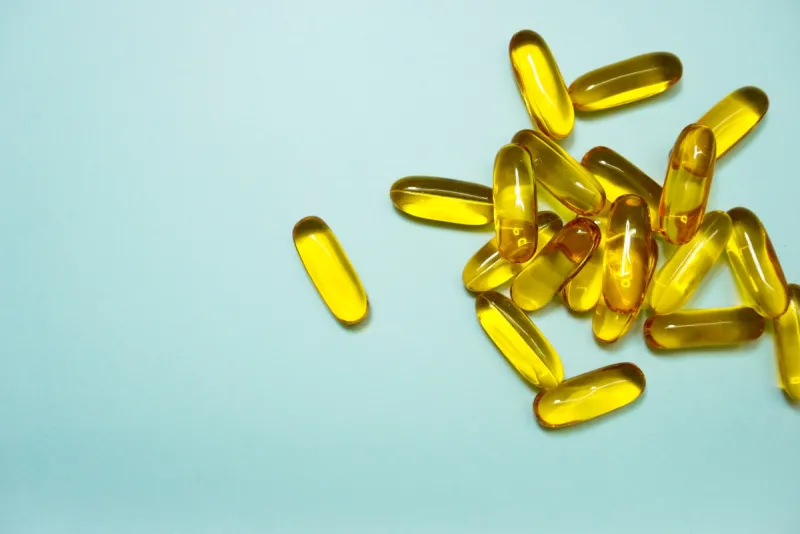
Omega-3 250 mg: The Minimum Dose for Heart Health
250 mg of combined EPA+DHA per day is a significant number in the omega-3 world. It is the exact threshold at which the European Food Safety Authority (EFSA) allows manufacturers to claim that their product "contributes to the normal function of the heart" (EFSA, 2010). Not 200 mg, not "some omega-3" -- specifically 250 mg of EPA and DHA combined.
This guide explains why this number matters, what you can realistically expect from it, and whether it is enough for your goals.
Who this is for: Health-conscious adults looking for a straightforward daily omega-3 dose for prevention, not treatment.
TL;DR
- 250 mg EPA+DHA daily is the EFSA-approved minimum for the heart health claim (EFSA, 2010).
- This dose is appropriate for general health maintenance, not for treating elevated triglycerides or chronic inflammation.
- It maps roughly to eating one portion of fatty fish per week.
- For cardiovascular event reduction, meta-analyses show stronger effects at 1000+ mg/day (Hu et al., 2019).
- DHA brain function claims also require 250 mg, but of DHA alone (EFSA, 2010).
- A single well-formulated capsule can deliver 250 mg EPA+DHA, making compliance easy.
Why 250 mg Is the Benchmark
The 250 mg threshold is not arbitrary. EFSA evaluated multiple observational studies and randomized controlled trials before concluding that this intake level was associated with a reduced risk of coronary heart disease (EFSA, 2010).
The key evidence came from large prospective cohort studies showing that populations consuming at least 250 mg EPA+DHA daily -- equivalent to roughly 1-2 fish meals per week -- had significantly lower cardiovascular mortality than those consuming less (Mozaffarian & Rimm, 2006).
What the Claim Actually Says
The approved wording is: "EPA and DHA contribute to the normal function of the heart. The beneficial effect is obtained with a daily intake of 250 mg of EPA and DHA."
Note what it does not say: it does not claim to prevent heart disease, lower cholesterol, or treat any condition. It says "normal function" -- meaning this dose supports baseline cardiovascular physiology.
What 250 mg Can and Cannot Do
| Benefit | 250 mg EPA+DHA | Evidence |
|---|---|---|
| Normal heart function | Yes (EFSA-approved) | EFSA, 2010 |
| Normal vision (DHA) | Yes, if 250 mg is DHA | EFSA, 2010 |
| Normal brain function (DHA) | Yes, if 250 mg is DHA | EFSA, 2010 |
| Triglyceride reduction | No -- requires 2000 mg | EFSA, 2010 |
| Blood pressure maintenance | No -- requires 3000 mg | EFSA, 2010 |
| Anti-inflammatory effects | Unlikely at this dose | Li et al., 2014 |
| Cardiovascular event reduction | Modest benefit possible | Hu et al., 2019 |
The takeaway: 250 mg is genuinely useful for everyday heart, brain, and eye maintenance. It is not a therapeutic dose for existing conditions.
250 mg From Food vs. Supplements
One 150 g serving of Atlantic salmon provides approximately 3000-3500 mg of EPA+DHA (USDA, 2019). A single serving per week averages out to about 430-500 mg per day -- well above the 250 mg threshold. Other fish options:
| Fish (150 g serving) | Approximate EPA+DHA | Servings/week for 250 mg/day |
|---|---|---|
| Atlantic salmon | 3000-3500 mg | 0.5-1 |
| Atlantic mackerel | 2500-3000 mg | 0.5-1 |
| Sardines (canned) | 2000-2500 mg | 1 |
| Rainbow trout | 1500-2000 mg | 1-1.5 |
| Canned tuna (light) | 400-500 mg | 3-4 |
| Cod | 200-300 mg | 6-7 |
If you eat fatty fish once a week, you likely already meet the 250 mg daily average. A supplement is most useful for people who rarely eat fish.
Choosing a 250 mg Omega-3 Product
Not all products labeled "250 mg" are equal. Here is what to verify:
1. EPA+DHA Content, Not Total Oil
A capsule containing 250 mg of total fish oil might only deliver 75 mg of EPA+DHA. You want 250 mg of EPA+DHA combined, which may require a capsule containing 700-1000 mg of total oil.
2. Form Matters
Triglyceride form (rTG) absorbs 70% better than ethyl ester (EE) when taken without a fatty meal (Dyerberg et al., 2010). If you take your omega-3 with breakfast that includes some fat, the difference narrows. But for the most efficient absorption, rTG is preferable.
3. Freshness
Omega-3 oils oxidize. The TOTOX (total oxidation) value should be below 26. Brands that publish third-party test results earn more trust. Signs of rancidity: strong fishy smell, yellow or cloudy oil, expired date.
4. Certifications
Look for IFOS (International Fish Oil Standards) or Friend of the Sea certifications. These indicate the product has been tested for heavy metals, PCBs, and dioxins.
Daily Routine for 250 mg
1. Take one capsule with your largest meal -- the fat in the meal boosts absorption (Lawson & Hughes, 1988).
2. Be consistent -- omega-3 benefits accumulate over weeks and months, not days.
3. Store in a cool, dark place -- a cupboard is fine; the refrigerator extends shelf life further.
4. If you miss a day, don't double up -- just resume the next day. At maintenance doses, one missed day is inconsequential.
When to Upgrade Beyond 250 mg
Consider a higher dose if any of these apply:
- You have elevated triglycerides -- the EFSA-approved dose for triglyceride maintenance is 2000 mg EPA+DHA per day (EFSA, 2010). This requires medical supervision.
- You train intensely -- athletes may benefit from 1000-2000 mg EPA+DHA for reducing exercise-induced inflammation and accelerating recovery (Philpott et al., 2019).
- You are managing mood or cognitive concerns -- clinical trials showing antidepressant effects used 1000+ mg EPA per day (Liao et al., 2019).
- You have joint stiffness or chronic inflammation -- anti-inflammatory effects of omega-3 become significant above 2000 mg/day (Li et al., 2014).
For most healthy adults with no specific complaints who eat some fish, 250 mg is a solid daily baseline. See our omega-3 concentrate guide if you decide to step up.
Common Mistakes
1. Confusing 250 mg fish oil with 250 mg EPA+DHA -- the most frequent error. Check the back label.
2. Relying on ALA instead of EPA+DHA -- plant omega-3 (from flaxseed, chia, walnuts) is mostly ALA, which converts to EPA at only 5-10% and to DHA at less than 1% (Burdge & Calder, 2005). To get 250 mg EPA+DHA from ALA alone, you would need to consume roughly 5000-10000 mg of ALA daily.
3. Expecting immediate results -- omega-3 integration into cell membranes takes 4-8 weeks. Be patient.
4. Stopping after a few weeks -- maintenance supplementation works best long-term. If you stop, tissue levels gradually decline over several months.
Estonia Context
In Estonia, 250 mg omega-3 capsules are available from pharmacies (Benu, Apotheka, Südameapteek) and online. Typical pricing is €8-15 for a 60-capsule bottle (2-month supply). MaxFit carries omega-3 products from European brands with verified EPA+DHA content. For a broader comparison, see our best omega-3 supplements guide and EPA vs DHA explainer.
Estonian dietary surveys suggest that average fish consumption is around 15 kg per person per year (Statistics Estonia), which translates to roughly 2 servings per week -- enough for many people to meet the 250 mg EPA+DHA target from food alone during weeks they eat fatty fish, but supplementation remains useful for consistency.
FAQ
Is 250 mg EPA+DHA the same as 250 mg omega-3?
Not necessarily. "Omega-3" includes ALA from plant sources, which is much less bioactive. Look for the EPA+DHA number specifically.
Can I take 250 mg omega-3 while pregnant?
EFSA recommends 250 mg EPA+DHA plus an additional 200 mg DHA during pregnancy and breastfeeding (EFSA, 2012). A 250 mg EPA+DHA capsule likely falls short of the DHA requirement unless it is DHA-heavy. Check with your doctor.
Is there any risk from 250 mg per day?
No. EFSA considers EPA+DHA intakes up to 5000 mg/day as safe for adults (EFSA, 2012). 250 mg is well within safe limits.
How does 250 mg compare to what my doctor might prescribe?
Prescription omega-3 products (like icosapent ethyl) deliver 2000-4000 mg EPA daily for treating very high triglycerides. That is 8-16x the maintenance dose. The 250 mg dose is for general prevention, not medical treatment.
Does the source (fish, krill, algae) matter at 250 mg?
All three can deliver 250 mg EPA+DHA. Algae-based omega-3 is suitable for vegetarians and vegans. Krill oil often comes in smaller capsules but at a higher per-mg cost. Fish oil is the most cost-effective at this dose level.
References
1. EFSA Panel on Dietetic Products, Nutrition and Allergies. (2010). Scientific Opinion on the substantiation of health claims related to EPA, DHA, DPA and maintenance of normal cardiac function, blood pressure, and triglyceride concentrations. EFSA Journal, 8(10), 1796.
2. EFSA Panel on Dietetic Products, Nutrition and Allergies. (2012). Scientific Opinion on the Tolerable Upper Intake Level of eicosapentaenoic acid (EPA), docosahexaenoic acid (DHA) and docosapentaenoic acid (DPA). EFSA Journal, 10(7), 2815.
3. Mozaffarian D, Rimm EB. (2006). Fish intake, contaminants, and human health: evaluating the risks and the benefits. JAMA, 296(15), 1885-1899.
4. Dyerberg J, Madsen P, Moller JM, Aardestrup I, Schmidt EB. (2010). Bioavailability of marine n-3 fatty acid formulations. Prostaglandins, Leukotrienes and Essential Fatty Acids, 83(3), 137-141.
5. Hu Y, Hu FB, Manson JE. (2019). Marine omega-3 supplementation and cardiovascular disease: an updated meta-analysis. Journal of the American Heart Association, 8(19), e013543.
6. Li K, Huang T, Zheng J, Wu K, Li D. (2014). Effect of marine-derived n-3 polyunsaturated fatty acids on C-reactive protein, interleukin 6 and tumor necrosis factor alpha: a meta-analysis. PLoS One, 9(2), e88103.
7. Liao Y, Xie B, Zhang H, et al. (2019). Efficacy of omega-3 PUFAs in depression: a meta-analysis. Translational Psychiatry, 9(1), 190.
8. Philpott JD, Donnelly C, Walshe IH, et al. (2019). Adding fish oil to whey protein, leucine, and carbohydrate over a six-week supplementation period attenuates muscle soreness following eccentric exercise in competitive soccer players. International Journal of Sport Nutrition and Exercise Metabolism, 29(2), 132-139.
9. Lawson LD, Hughes BG. (1988). Absorption of eicosapentaenoic acid and docosahexaenoic acid from fish oil triacylglycerols or fish oil ethyl esters co-ingested with a high-fat meal. Biochemical and Biophysical Research Communications, 156(2), 960-963.
10. Burdge GC, Calder PC. (2005). Conversion of alpha-linolenic acid to longer-chain polyunsaturated fatty acids in human adults. Reproduction, Nutrition, Development, 45(5), 581-597.
See also:
- Livsane Omega-3: Is This Pharmacy Omega-3 Strong Enough?
- Omega 3-6-9 Supplement: Do You Actually Need All Three? A Science-Based Guide
- Omegavie Fish Oil: Composition, Dosing, and an Honest Review
---
Browse omega-3 products at MaxFit -- free shipping on orders over €75.