Psyllium Husk vs Psyllium Powder: Which to Choose and Why
If you are shopping for a fiber supplement, you have likely encountered both psyllium husk (whole husks) and psyllium powder (ground husks). Both come from the same plant — Plantago ovata — but their texture, mixing convenience, and use cases differ significantly.
This guide is for people who do not know which form to choose. After reading, you will understand the differences and know which one fits your needs and lifestyle.
TL;DR
- Both work: same active compound (arabinoxylan), same health benefits
- Whole husks: more bulk, more water needed, better for baking
- Powder: faster mixing, smoother consistency, easier to consume
- Fiber content: husks ~71 g/100g, powder ~85 g/100g (more concentrated)
- Price: husks generally 10-20% cheaper per gram
- Baking: husks are the clear winner (absorb more water, provide structure)
What Is Psyllium Husk?
Psyllium husk is the outer shell of Plantago ovata seeds in its whole form — light, fluffy fibers that look like fine flakes. These are minimally processed: seeds are hulled, husks separated, and packaged.
Husk pieces are typically 2-5 mm long and range from pinkish-white to light yellow. When placed in water, they swell more slowly than powder but form a thicker, fluffier gel.
What Is Psyllium Powder?
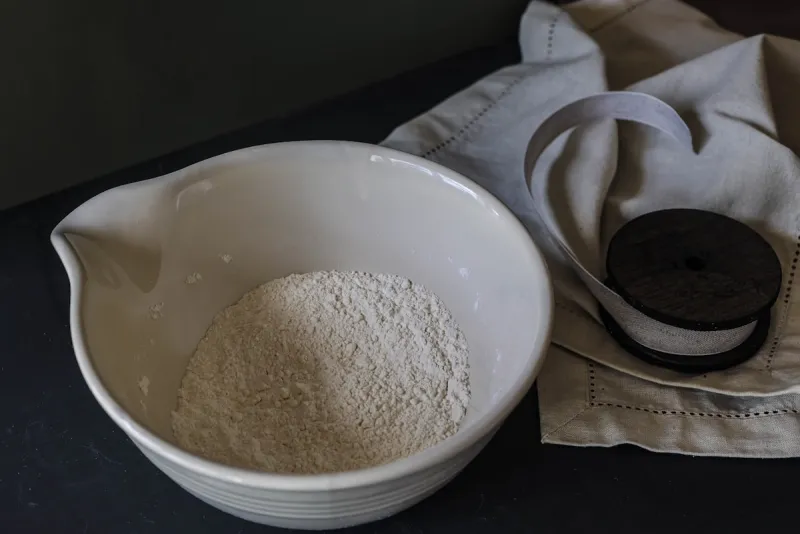
Psyllium powder is the same husk ground to a fine consistency. Grinding increases surface area, resulting in:
- Faster water absorption
- Smoother gel consistency
- Higher fiber content per gram (less cell structure, more pure fiber)
Head-to-Head Comparison
| Property | Whole Husks | Powder |
|---|---|---|
| Fiber (per 100g) | ~71 g | ~85 g |
| Gel formation speed | Slower (1-2 min) | Fast (seconds) |
| Drinking texture | Fluffy, noticeable | Smooth, dense |
| Taste | Almost tasteless | Slightly earthy |
| Baking | Excellent | Weaker structuring |
| Mixing ease | Less clumping | Clumps quickly |
| Price (EUR/100g) | EUR 1.50-3.00 | EUR 2.00-4.00 |
| Available as capsules | Rarely | Often |
Which Form for Which Purpose
Choose whole husks if:
1. Baking gluten-free bread — husks absorb more water and give dough elasticity that compensates for missing gluten. Typical amount: 1-2 tablespoons per 500 g flour
2. You prefer slower gel formation — some people find that slower swelling is gentler on the stomach
3. You want the cheaper option — husks are generally 10-20% less expensive
4. Using as a baking binder — egg substitute: 1 tsp husks + 2 tbsp water = 1 egg replacement
Choose powder if:
1. Mixing into drinks — powder gives a smooth consistency without chunks
2. You want capsule convenience — powder is the most common capsule form
3. You want higher fiber per serving — 5 g powder = ~4.25 g fiber vs 5 g husks = ~3.55 g fiber
4. Mixing into smoothies — powder blends better
Dosage for Both Forms
Since fiber content differs, dosage adjusts slightly:
| Goal | Whole Husks | Powder |
|---|---|---|
| Constipation | 7-12 g/day | 5-10 g/day |
| Cholesterol reduction | 10-14 g/day | 7-10 g/day |
| Blood sugar control | 7 g before meals | 5 g before meals |
| IBS | 5-10 g/day | 5-7 g/day |
For both: drink at least 250 ml of water per 5 g dose. Start with 2.5 g per day and increase gradually.
Baking Guide
Psyllium husk is the hero of gluten-free baking. It mimics gluten's elasticity, helping dough rise and structuring the final product.
Gluten-Free Bread with Psyllium Husk
Ingredients:
- 500 g gluten-free flour blend
- 2 tbsp psyllium husk (whole)
- 7 g dry yeast
- 1 tsp salt
- 400 ml warm water
- 2 tbsp olive oil
Instructions:
1. Mix dry ingredients together
2. Add water and oil, knead 5 min
3. Cover, let rise 45 min
4. Bake at 200C for 40-45 min
Tip: Do not use powder for baking — it absorbs water too quickly, resulting in a dense, gummy texture.
The Science Behind Both Forms
Both forms are clinically studied and effective. McRorie (2015) emphasizes that psyllium's effectiveness comes from its gel-forming soluble fiber, which is present in both forms. What matters is total fiber intake, not the form.
In the Wei et al. (2009) meta-analysis, forms were not differentiated, but all studies used standardized psyllium products at 5-10 g of fiber per day.
Quality Control: What to Look For
1. Purity — a good product contains 100% psyllium with no fillers. Check the ingredient list
2. Organic certification — psyllium is primarily grown in India. Organic certification reduces pesticide risk
3. Packaging — for husks, prefer resealable bags (protecting from moisture)
4. Color — quality husks are light to pinkish in tone. Dark color indicates age or contamination
| Quality Marker | What to Check |
|---|---|
| Ingredients | 100% Plantago ovata, no additives |
| Fiber content | >=70g/100g (husks) or >=80g/100g (powder) |
| Origin | India (largest producer) |
| Certification | Organic and/or GMP |
Common Mistakes
1. Wrong form for baking — powder does not give the same structure as husks. Always use whole husks for bread and pastries
2. Same dose for both — powder is more concentrated, so it needs a smaller dose for the same fiber amount
3. Over-blending — excessive blending makes the gel too thin. Stir by hand for 10-15 seconds
4. Storing open — psyllium absorbs air moisture. Seal the package immediately after use
5. Letting powder sit — mix and drink immediately. After 30 seconds it becomes too thick
Frequently Asked Questions
Can I substitute one for the other in recipes?
Conditionally. For baking, always use husks. For drinks and smoothies, both work. If substituting husks with powder, use 75% of the amount (e.g., 7.5 g powder instead of 10 g husks).
Which has more side effects?
Both cause the same side effects (bloating, gas) initially. Some users claim husks are gentler on the stomach, but there is no scientific evidence for this.
Are capsules as good as loose powder?
Yes, if quantities are equal. But capsules typically contain 500 mg, meaning 10-20 capsules for a 5-10 g dose. That is expensive and inconvenient. Capsules are better suited for travel.
Is psyllium husk vegan?
Yes, both forms are 100% plant-based. For capsules, check that the shell is cellulose (not gelatin).
Does psyllium lose effectiveness over time?
No, the gut does not develop tolerance to psyllium (unlike stimulant laxatives). You can use it long-term.
Estonia-Specific Context
Both forms are available in Estonian health food stores and online shops. Typical prices:
- Whole husks 250g: EUR 4-7
- Powder 200g: EUR 5-9
- Capsules (120 count): EUR 8-15
Prisma and Selver health aisles often stock Myvitamins and Now Foods brands. Price-wise, loose powder offers the best value.
Gluten-free baking is a growing trend in Estonia, and psyllium husk is also available at Selver, Rimi, and Kaubamaja food departments.
References
- McRorie, J.W. (2015). Evidence-based approach to fiber supplements and clinically meaningful health benefits. Nutrition Today, 50(2), 82-89.
- Wei, Z.H., Wang, H., Chen, X.Y., et al. (2009). Time- and dose-dependent effect of psyllium on serum lipids. European Journal of Clinical Nutrition, 63(7), 821-827.
- Bijkerk, C.J., Muris, J.W., Knottnerus, J.A., et al. (2004). Systematic review: the role of different types of fibre in the treatment of irritable bowel syndrome. Alimentary Pharmacology & Therapeutics, 19(3), 245-251.
- Jalanka, J., Major, G., Murray, K., et al. (2019). The effect of psyllium husk on intestinal microbiota in constipated patients and healthy controls. International Journal of Molecular Sciences, 20(2), 433.
- Gibb, R.D., McRorie, J.W., Russell, D.A., et al. (2015). Psyllium fiber improves glycemic control proportional to loss of glycemic control. American Journal of Clinical Nutrition, 102(6), 1604-1614.
See also our psyllium powder guide and fiber overview.
Browse MaxFit fiber supplements →
See also: